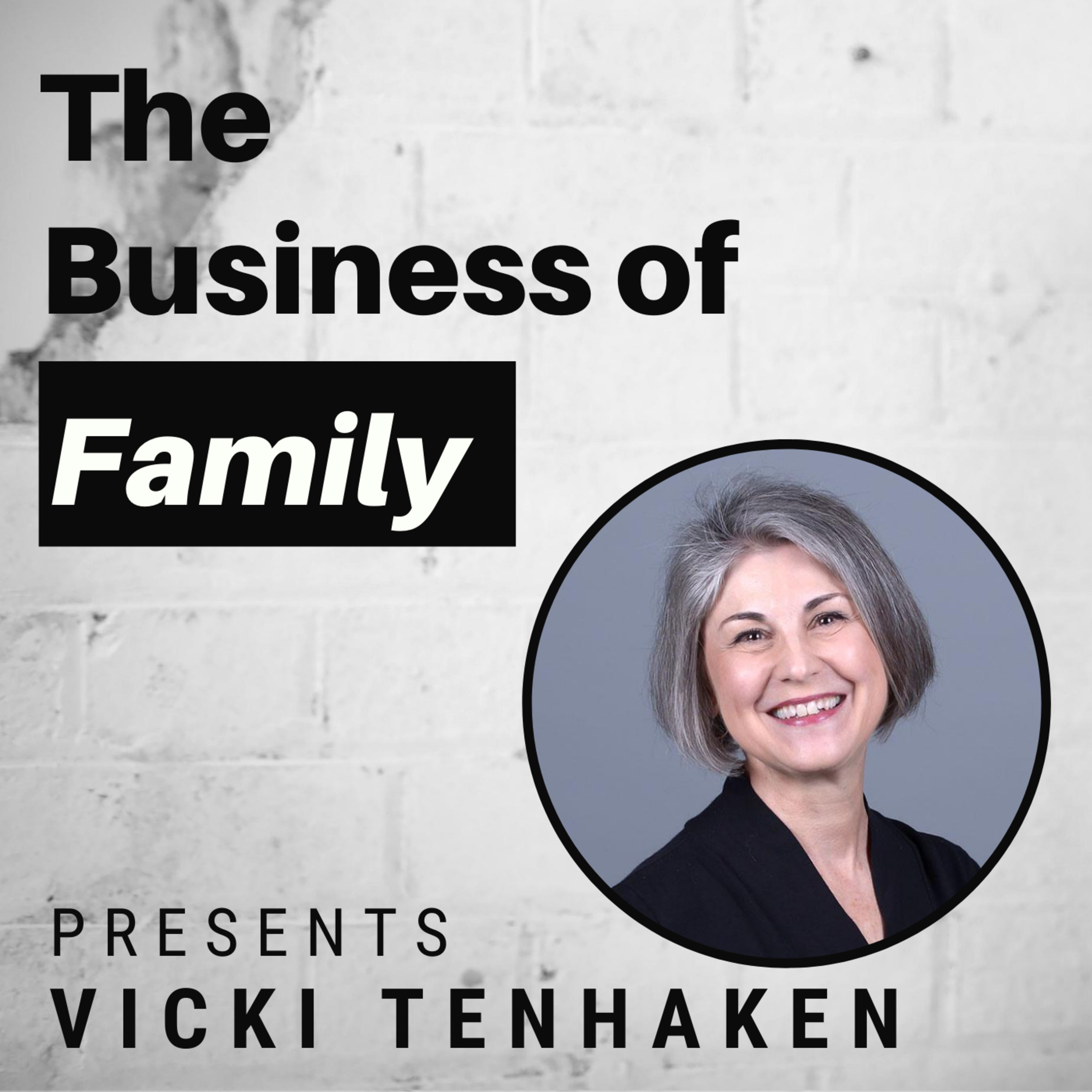
Episode 4 · Season 1
Lessons from Century Club Companies
Key ideas from this conversation
The old companies share five practices, starting with a clear reason to exist that was never only about making money.
They were careful with money, slow to borrow, and saved in good years for the lean ones.
Stories carry the strategy better than any strategy document, and they include the mistakes.
Read the full show notesBio, standout quotes and the episode timeline
This week's guest is Professor Vicki TenHakan, a college professor in management at Hope College in Holland, Michigan, a former business executive at Herman Miller and GE, a researcher of corporate longevity and the author of the excellent book; Lessons from Century Club Companies: Managing for Long-Term Success, a captivating book that details the lessons learned from companies that have endured for at least 100 years.
Key Takeaways
- The similarities and differences in culture and corporate longevity in American and Japanese century club companies
- The 5 major management practices in both the United States and Japan’s old companies
- Why it is important to take time to honor the past of the company while also embracing changes that are needed to prosper
- The prevalence of family-owned businesses in century club companies
- Understanding the role that strength in relationships play in stewarding businesses for over a century
- Learning that growth isn’t everything in company longevity
- Why storytelling is key in century club companies and the development of the next generation leaders
Standout Quotes
- “What I hoped to achieve was to uncover some management practices…that I would be able to not only share with my students to not only help them be more successful in their future careers but also for business leaders to be able to use.” - Vicki Tenhaken [3:35]
- “I saw what the lack of business success did to a community. I was really hoping that the future business leaders or current leaders would be able to benefit from some knowledge on these old companies on how they were able to survive and thrive through many economic disasters and other crisis over the decades and even the century.” - Vicki Tenhaken [4:08]
- “There’s no formula for it. The one thing that I did find out when talking to many of these old companies is that they knew when they needed to change. They kept on top of what was going on in the external environment… They made sure everyone in their company had a role in staying in touch with customers, suppliers, or other business leaders in the community.” - Vicki Tenhaken [11:26]
- "The strength of relationships is what almost every century club company said helped them make it through the tough times. They all had stories of crisis that they went through and it was relationships whether with employees, business partners, or community that they said really made the difference in terms of how they were able to not just survive the various crisis but actually prosper in the long run." .” - Vicki Tenhaken [19:11]
- "In business as in life, relationships are what matter most." - Vicki Tenhaken [46:51]
Episode Timeline
- [1:14] How Vicki became interested in corporate longevity
- [3:25] What Vicki hoped to achieve when embarking into research and what surprised her
- [6:12] The common management practices seen in old companies in both United States and Japan
- [10:26] What Vicki believes contributes to century club companies surviving for so long
- [13:41] Family-owned businesses role in companies that are over a hundred years old
- [17:41] The vital role that relationships play when stewarding a business for over one hundred years
- [21:09] Similarities in Japanese and American century club companies
- [24:04] Why some companies choose to not grow just for growth’s sake
- [29:41] Storytelling and the development of the next generation leaders
- [37:20] How century club companies survive crisis
- [43:51] The accessibility of Vicki’s database
- [46:07] Vicki’s belief that relationships are what matter not only in business but in life itself
Links:
- Lessons From Century Club Companies: Managing for Long-Term Success: TenHaken, Vicki : This book describes the results of ten years of research into the unique management practices of companies that have prospered for over 100 years.
- The Living Company: De Geus, Arie : Arie de Geus, the man who introduced the revolutionary concept of the learning organization, reveals the key to managing for a long and prosperous organizational life.
- Vicki TenHaken (@vtenhaken) / Twitter
- Vicki TenHaken | LinkedIn
- Vicki's Blog: How 100-Year-Old Companies Survive
Read the transcript
This transcript was generated automatically and may contain errors, including in names. Listen to the episode for the exact words.
MikeWelcome to The Business of Family. I'm your host, Mike Boyd, and this is my look into the world of multi-generational wealth creation, family enterprise, stewardship, family office investing, and the curation of a legacy. On the podcast, I interview members of some of the world's most interesting families to hear how they pass knowledge, resources, values, and wealth to the next generation.
I hope you'll enjoy sharing this learning journey with me and would greatly appreciate any feedback, resources, or referrals you have to offer. To sign up to my weekly business of family newsletter, go to newsletter.mikeboyd.com.au. This week's guest is Professor Vicki TenHaken, a college professor in management at Hope College in Holland, Michigan, a former business executive at Herman Miller and GE, a researcher of corporate longevity, and the author of the excellent book, Lessons from Century Club Companies, managing for long-term success. I first picked up Vicky's book a number of years ago and it immediately resonated. The research that she did into enduring companies I found fantastic, many of which are family-owned. I can't wait to explore this topic further with you, Vicki.
Thank you so much for joining us today.
VickiI'm pleased to be with you.
MikeCan you tell us how you first became interested in corporate longevity? What led to the study?
VickiWell, it's interesting because my first interest in corporate longevity was back when I was executive vice president of strategy at Herman Miller. And I attended a futures conference where I heard Arie de Geus speak. He was the head of strategy for Shell Oil at the time. And he told some very personal stories about his relationship with Shell and also the research that he did on corporate longevity to try to make sure that the company would succeed into the future. And after that meeting, I picked up his book, which I would highly recommend, called The Living Company. And in that book, he talked about the factors that he uncovered.
They studied companies that were over 200 years old and were large public firms to try to figure out what could make them succeed when so many others fail. And that's when I first became very interested in the idea of corporate longevity. Herman Miller at the time was nearing its 100th birthday, and so it was something of interest to me. It sort of sat in the back of my mind until I made the move to academia and needed a research agenda. And when I accompanied students to a May term in Japan and heard my what would become future research partner, Makoto Kanda, speak about his work researching old Japanese companies, it was like, okay, now I found my research agenda. This is something I've been interested in and somebody who's already
doing it. And when he agreed to let me partner with him, it was a huge success for me. I was really happy to be able to do it.
MikeAnd when you first embarked on your research into this area, what did you hope to achieve and maybe what surprised you the most that you didn't expect?
VickiWhat I hoped to achieve was to uncover some management practices. At that point, I was a management professor to uncover some practices that I'd be able to not only share with my students to help them be more successful in their future careers, but also for business leaders to be able to use. At the time, there were a lot of businesses that were failing in our area, many being purchased by large companies, and then the local factory was closed.
And I saw what the lack of business success did to a community and was really hoping that future business leaders or current leaders would be able to benefit from some knowledge of these old companies on how they were able to survive and thrive through many economic disasters and other crises over the decades and even the century. So it was the desire to be able to uncover something that might be useful. And what surprised me, I guess what I'd have to say, is that how difficult it was to build the database of old companies for the United States.
When I first started working, I worked with Makoto Kanda in Japan, as I said, and there, because they honor old companies and longevity in general, a database of companies was readily available. In the U.S., I discovered that no such database was available. Some states had Century Club companies that their governors honored every year with new members. And so that made it a little bit easier to identify. But that was very few states had them. And the work of putting together the database of companies that were over 100 years old that were still in operation proved to be rather difficult and a long process.
MikeThat was one of the things that I found most fascinating about your research, the comparison between the two cultures of America and Japan. Obviously, Japan and a lot of Asia celebrates longevity, as you said, or honors it. And the individualistic society of the West is oftentimes very, very different. And it's partly why I'm passionate about exploring the business of family and multi-generational wealth and family businesses because it's very, very difficult to achieve this succession. So I'm curious, did you discover any common characteristics or practices amongst the Century Club companies when you compiled this list and ultimately studied them?
VickiYes, we did, fortunately. It was interesting when I first started presenting this research at academic conferences, it was mainly based on the Japanese research. And the pushback I always received was, well, that's just Japan. You know, they have this different business model built on relationships. You can't really apply that to the United States. So it became imperative that I, you know, do the same research in the U.S.
in order to compare it to the Japanese companies. And once we were able to do that, which I will admit took longer than I had hoped for, it turned out that there were, in fact, common factors or management practices that old companies in both countries engaged in. And, you know, there was difference statistically in terms of how much one country's old company supported a practice than the other. But overall, everything really was reinforced in terms of old companies were more similar in the two countries than they were different.
And I kind of distilled it down into five major practices that in brief could be described as One, having a real mission in terms of a really clear statement of their business purpose. And that, you know, this is what we do and why we do it. It's core to who we are. And they were very clear about it.
And it wasn't just about making money. It was about what their reason for being in business was, what value they brought to society. The second factor was that they tended to have some core competency that they believed distinguished them from their competitors and that would be very difficult to copy. And they truly invested in building that competency, that strength, if you will, over time.
And what that meant was that they also had to change over time. And so it was not only having a clear core competency, but then developing it and adapting it over time as necessary. Those were the first two management practices that we found were unique to old companies. And the last three really all have to do with relationships.
The third factor was that they had long-term and close relationships with their business partners, with customers, with suppliers and dealers, other related business units. They almost viewed them as extensions of their company because so many of them were small. And then the fourth factor was long and very close relationships with employees who they invested in. And then the last one was truly interesting one that we uncovered, which was really close relationships with their local communities in terms of, you know, investing in the community and really being seen as a member of that community as sort of an almost an extension of their family or their company.
So the relationship aspect that came through very strong, not just in the Japanese results, but also in the US surveys.
MikeI think that that's something that's often celebrated in family business culture, that they're often such big participants and advocates for the local community because they've been around so long and they intend to be around for so long. They can make long-term commitments, long-term bets in the business, but also have long-term impact within the community around them. And I think that's really powerful.
But one thing that I'm interested in is obviously sometimes we think about very old companies being stuck in tradition, doing things the way they've always been done. How have Century Club companies, by definition, survived for so long, at least over 100 years, without being disrupted by new technologies or innovations or being stuck in their ways?
VickiYes, this is one of the trickiest practices, I think, in terms of how these old companies both maintain and celebrate tradition and also manage change. And as a matter of fact, when I had Roger Martin, who's written a number of strategy books, was the dean of business school in Toronto, and he looked at it and he said, you know, this is the difficult one.
It's easy to talk about, but really hard to do, that balance of tradition and change. And there's no formula for it. The one thing that I did find out in talking to many of these old companies is that they knew they needed to change. They kept on top of what was going on in the external environment. And again, many of them were small to medium-sized businesses.
They didn't necessarily have their own research groups, but they made sure that everyone in their company had a role in staying in touch with a customer or a supplier or other business leaders in their community that would kind of keep their feelers out for, you know, what should we be looking at? What should we be concerned about? You know, what is what's going on here, whether it's changes in technology or globalization or government interference, if you will.
And then the way they went about making change when they needed to was really interesting. The reason I found it interesting, because this is the one thing that did conform with what we teach in business school in terms of change management. But it's a change management process that I find many companies don't actually implement. And it was one that they take a very long time to do it.
In fact, in the research, the 100-year-old companies mostly said we take too long to make major change. But it was the fact of taking that time to honor the past and what was good about it and what led them to their success today. but then also saying, now this is why we need to change and this is how we're going to do it.
And that the process of bringing everybody along in making the change, rather than throwing out the baby with the bathwater, so to speak. They brought employees along and suppliers and customers and really made the effort to make the change together, if you will. And recognizing many of them said it was a crisis point, but they managed to use their values and what was strong about the company to help make the change.
MikeThat's excellent. And I'd love to touch on now the family-owned businesses. Your research in the Century Club companies, I assume that not all of them were family-owned, but many of them would have been. Did that show up in the research? Were they a minority or a majority? And were the family-owned companies any different to the non-family-owned companies?
VickiYeah, this is an interesting one because what Makoto Kanda did in Japan was focus almost exclusively on private family-owned companies. And when I decided to do the research in the US, I chose to just identify any company that was over 100 years old. And I asked in the survey whether they were private or public and whether they were a family generational company, but I didn't focus exclusively on family-owned companies. But what was interesting, the results were that by far the majority of the companies that made it to the Century Club mark were privately owned. About 86-plus percent of them were privately owned companies. And of those, the majority, in fact, were generational family-owned companies. Upwards of over 60%
were family-owned companies. And I think that this whole idea of stewardship that comes with passing a business on from one generation of family to another truly makes a difference. And once you're the fifth or sixth generation of a family to own and run a company, you want to make sure that it doesn't fail under your watch, or if it does, that you do it in a way that your ancestors would be proud of how you managed it and how you did it.
MikeYeah, it certainly adds the pressure, doesn't it? When five generations have preceded you and survived various crises, and now you're the sixth or the seventh and have to honor the tradition and hopefully steward it forward for another generation. On that note, actually, your study, did it only focus on the business itself? Or did you learn any insights about how these multi-generational families also operated?
Because one of the things that we explore on the podcast in my research is a lot of times, family wealth or family businesses are lost not due to poor decision-making in the business, but usually due to infighting or breakdown of relationships at the second, third, fourth generation. Did you glean any insights almost by accident in studying how these businesses have lasted so long?
VickiYeah, it wasn't a focus of the research in terms of how families manage that process. There were some anecdotal stories, of course, that came out as a result of it. And the one thing that I would say seemed to stand out the most was the focus on developing future leaders. You know, how are we going to make the transition when that happens?
Who is going to lead the company? How are we going to come together as a family to support that leadership decision? And the fact that they worked on that long before the current leader was anywhere near retirement or passing it on to the next generation. That piece came through loud and clear and actually was pretty consistent with other Century Club companies and what they do in terms of leadership succession and development as well.
Just a matter of being very deliberate about it long before the transition actually needs to happen so that if there are any difficulties, they can be worked through before it's actually necessary.
MikeThey're very, very intentional by the sounds of it. Beyond the family, you touched on relationships before playing a role in three out of the five major characteristics that you discovered. I'd love to dive into that a little bit more and explore how relationships have played a role in stewarding these businesses for over 100 years.
VickiThis is an interesting factor to me. I found when I often present this research, particularly at academic conferences, I start out by saying, you know, the good news is that there are common factors that old companies engage in that they say have led to their longevity. The bad news is it's not necessarily what we teach in business school.
And it's the soft side of business that really seems to make a difference. And yet, for some reason, we as academics and as business leaders are often reluctant to talk about it or really work on how to make it happen and make these relationships succeed. I was encouraged when I interviewed one former retired CEO of a public company that was a Century Club company, asked him to read through the research results and see what he thought.
He said, yeah, I think this all sounds right on the mark, except I don't think you emphasize relationships enough. And so it's like, OK, we've got something here. And it's interesting to me that the strength of relationships is what almost every Century Club company said is what helped them make it through the tough times. You talk about, you know, they all had stories of crises that they went through.
And it was relationships, whether with employees or business partners or their community, that they said really made the difference in terms of how they were able to not just survive the various crises, but actually prosper in the long run. And what they made a clear point of saying is that because they were focused on building the relationships, the business success followed.
that by building others, employees, and helping customers succeed and helping suppliers and others succeed as well, that they succeeded. And that they talked about it as a web of relationships. Often it was connected to their family history and reputation, but it was both commercial and economic and social that they said it's like we're all in this together and that if everybody succeeds, then we will succeed as well. They also said that you can't just take these longevity factors independently and say, well, we'll do this one, but we don't think this one is necessary.
They said you really need all of them working together because of the web of relationships that reinforce each other. And that by building it all around and interconnecting it, that's what enables not just us as a company or a family to succeed, but all the, well, I think the term is all the stakeholders in the business succeed as well.
MikeLet's explore the comparisons that you made between very old Japanese businesses and American businesses. What were the key differences between them beyond just obviously the major cultural difference. But what were the key differences you found in those businesses? And were there also key similarities?
VickiOne of the last papers I did was to really dig down into the individual practices between the Japanese shinise and the American Century Club companies to see where were the differences and where were the commonalities. And even though overall, they both supported all the major factors, there were some areas where U.S. companies, though still showing support for a certain behavior, were significantly less supportive than the Japanese firms.
When I looked at, analyzed them in more detail, it appeared to be differences in implementation rather than in intent or strategy. For instance, U.S. firms didn't show as much support for many of the supplier relationship practices that old Japanese companies practiced. Yet, U.S. firms were more likely to have maintained long-term relationships with their suppliers. They just tended to do it in a different way. And though U.S. firms were less likely than their Japanese counterparts to have a systematic plan in place to develop future leaders, they put more emphasis on developing their leaders from within the company. The U.S. companies reported less likelihood of having a systematic career plan in place for developing future leaders, but they supported
all of the other leadership development factors. So again, it tended to be one of details of practice rather than overall intent or management. I think, you know, kind of getting back to one of your earlier questions about private companies or family-owned companies versus public companies, one of the things that came through in both the Japanese and the U.S. companies was this conservative approach to managing finances as a specific practice, if you will, even though a lot of the values and culture mission statements varied. They did tend to all be quite conservative in managing their practices, reluctant to go into debt and saving up money in good years to help them through the lean years. And I think that that's one of the reasons that they've stayed
small, many of them, but also one of the reasons they've been able to weather some economic crises like we're facing today.
MikeYeah, it's extremely relevant to what we're facing today. You just touched on that many of them were small or remained quite small. Did that play a role in longevity or was that just a consequence of the conservative investment approach?
VickiYeah, it appeared to be a consequence of the not growing for growth's sake, not emphasizing growing large or taking risky investments. But there are large Century Club companies, and it seems that it's more a matter of what makes sense in terms of how they grow. I think that the conservative financing definitely played a role. One company told me, they said, yeah, people keep telling me we should expand to other locales. This was a retail business. They said, but then we'd have to borrow money, first of all, to do it. Secondly, we'd have to hire people outside the family and train them and try to figure out, are they going to really run things the way we want things run?
And, you know, we make plenty of good money the way it is, and we're happy with the business the way it is. So why would we take that risk? So there's, I think, intent is part of it. Conservative financing is part of it. When it makes sense to grow, when they need to grow in order to sustain the company, they do.
And some of the crises that they talk about are those times when they had to do it. And it was a major decision. And in some companies, they actually even went public in order to get the money that they needed to invest in a new product they had that they thought was absolutely necessary. to implement. And then they said, we just had to be very careful about maintaining the culture and how we managed forward, but seemed to only do it when they thought it was absolutely necessary, not just because they needed to grow in order to satisfy shareholders or to feel like they were managing a bigger business.
MikeThat's interesting. I run technology companies, And I'm a proponent of longevity, even in that space, which was quite contrarian because the Silicon Valley rationale that growth at all costs is something that I often fight against. But one of our businesses is in its 20th year this year, which is a very, very long time for an e-commerce company. And I think that sometimes it just comes back to core values about why are we here? Who are we looking after? What are the key relationships? And are we making enough money to continue on that journey.
We don't necessarily have to grow to satisfy external shareholders or return a fund. And I think that completely changes the dynamic.
VickiIt certainly does. But even, you know, I talk about the business practices we teach in business school. I mean, grow or die was a maxim that we followed for years that it was absolutely necessary. And I think they're questioning now. As a matter of fact, there even is a book that was just out. I can't remember the name of it.
I'm sorry. Roger Martin again. that talks about being good enough and that efficiency and growth isn't always necessary in order to be successful and to prosper. And that how we live and manage in today is important.
MikeAnd I think it's probably worth us clarifying. We started this question by asking about small companies. How do you define small? Did your research uncover what the average size of these century club companies were?
VickiI promised most of them that I would keep that confidential because most did not want to share that information. So I pretty much based it on number of employees rather than sales level and then followed the US definition for small to medium-sized companies.
MikeSure. And completely understandable too. That's my challenge also in speaking to private families about their wealth. Of course, many are reluctant to share, but we all want to learn from their experience.
VickiAnd that was another interesting thing about, you know, I wanted to get to the issue of profitability, talking about, you know, conservative financing and everything else they were more than willing to talk about. But in Japan, my counterpart in research found that these companies, even though they don't focus on profit, that's not part of their mission statement, that they were a lot more profitable than other companies. And European researcher uncovered the same thing. And I could not get that information from US companies because they just weren't willing to share it with me, except for one of them said, Oh, yeah, we're okay there. We're very profitable. I just don't even want to look at the numbers or share the numbers to it. So it's great. But they view it
as being the result of doing everything else that they do very well, rather than the focus of it. But I think that's also, it's what they do with that profit too that makes a difference. This whole idea of setting aside money in prosperous times to weather the lean years, sharing it with the employees. I think that they, even though they might be reluctant to talk about it, they wouldn't be successful over 100 years if they weren't profitable businesses.
MikeAbsolutely. In a recent newsletter that I sent to the business of family subscribers, one of the topics that we explored was documenting your history and writing letters to your kids. And some of the research that I've done into this area of recording family history and passing stories down from generation to generation has led to families remaining closer as the generations go on and as the family grows in size too, as they get down to the third and fourth generation. Do Century Club companies also embrace storytelling to keep their founding vision alive?
VickiStorytelling is absolutely key for these Century Club companies. And having a good storyteller as the head of the company makes a big difference. If the current leader isn't quite comfortable in that role, they make sure that somebody else is sort of the one company even has a part of their new employee orientation is called storytelling. And it's they have various employees come in to talk about the company and its culture and its history and their relationship, if not with the founder, with the subsequent generations. And the whole idea of being very deliberate about here's who we are, here's what our values are, here's what we care about, and here's how we manage things is so important. And it's best transferred through storytelling than through
some strategy document, if you will. Companies will do things like video record the founder, or if it's not so much the founder at this point, but the stories about the founder, I should say, by future generations that they use to help transfer. They also, I found in family-owned companies tend to have family reunions that, especially once there's more of an extended, large family where once a year they get together not only to talk about the business, but to build relationships with each other. And they make a big part of it, sharing the stories and not just old stories either, but also new stories about how we overcame this particular crisis or how we implemented this new product and how it was in keeping with our values so that the younger
generations hear these stories from the time they're growing up. But I think the stories are just as important for employees and suppliers and customers and local communities to hear as it is for family. Many of them now have a link on their website that talks about the story of their family. Several of them have published books that they've been willing to share with me that talk about the stories. And yes, they tend to focus on either the founder or some other key mover in the family, which sometimes is the second or third generation, actually. But also stories about employees and customers and suppliers and their community, because again, they want to try to tie this all
in together as the web, the interconnected relationships, the circle of life, if you will. One company even told me that they've started using a book called Strategy as Storytelling, that they want to make sure that when they are talking about business strategies, particularly new ones, that they use storytelling as the way of doing it. I think it's a critical part of particularly with family-owned companies.
And again, if you're the current leader of the company and you don't feel like you are a storyteller, find someone who is. I can remember when I was at Herman Miller, the quarterly business meetings that we had, the second generation family member who was CEO at the time would always start his update with a story that made it more accessible.
The point he was making more accessible and more memorable in terms of what he wanted us to leave the meeting with. So it's, I think, a critical piece.
MikeYou touched on their succession and developing the next-gen leaders. And I say next-gen in the sense that it could be a family-owned company or otherwise. But one of the key things that I'm interested in exploring is this concept of individual ownership versus stewardship. And particularly in these businesses that maybe aren't family-owned, how do you develop an understanding and an ethos and a buy-in to the concept of stewardship, which is often about putting ego aside in order to steward a business through for another generation or for another decade or two. How are these companies really trying to develop next-gen leaders in that sense?
VickiYeah, this is a difficult one because I think that whether it comes down to how we train our business leaders or whether it's just an inherent attitude that an individual has about how to manage. This whole idea of stewardship versus making a name for oneself as leader of a company, I think, makes a big difference in how one leads a company. There even was an article in Fortune magazine years ago that the title of it was The Good CEOs. And they had trouble even getting people to interview for the article because the CEOs that they wanted to interview said, you know, this isn't about me. It's about the company and the company succeeding. And by
focusing on me and my leadership, you're missing the point. And I think that in terms of betting new leaders for a company, that's the kind of thing that you perhaps can't build into someone unless it's already there. And so it's a matter of uncovering what their real motive is for helping the company succeed. And if their desire is to see the company succeed so that everyone else succeeds, so that the company survives, if that's how they view success versus how well they've done with the company and how much they've made the company grow, it makes a difference. I think it's just one of those things where you need to be careful about developing leaders. And that's one of the reasons
that they tend to identify people early and then watch them develop over time because you can see how they lead and how they react to successes as well as to failures. Many of the companies said they wanted future leaders who had worked in some operational aspect of the company first, whether it's sales or manufacturing or marketing, whatever it is, because they wanted someone who really cared about and knew the company. By seeing these actions over time, they could identify if someone had that nurturing stewardship attitude versus the sort of egotistical, what can I accomplished approach.
MikeOne of the things I often think about when researching multi-generational companies is how they survived crises in particular. A recent guest on the show is the sixth generation CEO of his family business. And in storytelling, he remarked how his family business had already survived the two world wars and had to rebuild after each one a different way. Are Century Club companies particularly resilient? Is that the reason for their success? Or is it just coincidence that because they've been around for such a long time, they've naturally had to survive many crises?
VickiThat's an interesting question. Obviously, they're resilient. What causes that? Is it intent? Is it following certain practices? Perhaps hard to say, they have all had crises. None of them would say it's been smooth sailing for over 100 years. And I think it's a matter of their willingness to talk about those crises and how they face them and use it as a lesson for the future, almost as a way of saying we're not perfect. We had problems too, but this is how we deal with them. And this is how we would hope that we'll be able to deal with them in the future. Again, it comes back to the storytelling. And what Arie de Geus hit on in his Living Company book, it's the organizational learning, if you will.
I know that also is kind of a buzzword these times, but it is a matter of what can we learn from it versus being embarrassed about the crisis and that this will help us in the future. I talked to one CEO said, you know, my year-end report with employees is always here's the mistakes I made and here's what I hope we learned from them. And whether it's the crises of making it through a world war or economic recession or coronavirus or the technology changes, some of them, the technology changes obsoleted their whole product that their company was based on.
And yet they found a way to shift gears and move into some other area that they could succeed in. So it's, yeah, I think it does come back to the storytelling and building on your strengths and your culture. If you've got everybody pulling together and you've got the strong culture and values behind it and you can call on all of your employees and business partners to help you weather through it together, it's possible.
But that doesn't mean it's easy. And none of them would say that it was. It's just a matter of how did we address it and what did we learn from it and how can we rebuild in the future to keep it going.
MikeLearning from their mistakes and building on it. And there must be an awful lot of compounding knowledge in these Century Club companies, I imagine.
VickiAnd I think that's one of the benefits that you get by having, you know, one of the factors is long-term relationships with employees, with customers and suppliers as well. But particularly the long-term relationships with employees, you have that built-up organizational learning that really makes a difference in terms of being able to respond to crises quickly when necessary and understanding how to get through it and what we can do.
and also understanding when things need to change and that things don't always stay the same. But that doesn't mean that they will be worse just because they're changing, that they can actually be better on the other side.
MikeYou touched on it earlier in the conversation about how some companies have even had to go and raise money or go public in order to survive a particular threat. Did you find a distinction between the longevity of a business and whether it goes public or remains private?
VickiIt does appear, based on the research, that it is much harder for a public company to survive long-term than it is a private company. Although there are public companies that are over 100 years old, some of them are actually quite closely held, however. So the company maybe needed to go public to raise money or they had one branch of the family that wanted their money out and that was the way they chose to do it. But there are several where you'll see in my database, it says a public company, but it's fourth generation management. So that's one way of going public. There are others, fewer and far between. Several of them, they end up either getting bought out by other companies or
clearing bankruptcies at certain points in time, it's possible to be public and over 100 years old. And again, that was one of the reasons Arie de Geus from Shell wanted to study public companies because that's what they were. Every private company I talked to in the Century Club believes strongly that their longevity and prospering is due to their ability to stay private, that they can chart their own course rather than having to report quarterly earnings and growth statistics, that they can make decisions for the long term without having to explain it to a very anonymous financial market.
So it does appear that it's more likely to be able to attain longevity if you stay private, but it's not impossible to become a Century Club company if you're public. It just takes intent. If the leadership of a public company says, this is how we're going to do things, and anybody who invests in our company needs to know that because that's how we're going to manage, then it's possible. But it takes understanding investors and management who's willing to work for the long term rather than feeling the need to show those quarterly statistics that are so prevalent.
MikeI would have assumed that private companies had greater success in stewarding over a long term, but it's great to hear that there's public examples as well. In that response, Vicki, you mentioned your database. Is that something that if the audience is curious about, is that something that's accessible or is it accessed via your book? How do interested parties explore that a bit further if they want to dig into the data?
VickiIt varies. I have been updating the database that's in the book every couple of years. As companies fail, as some do, or I should say close, some of them just... You can have a good death for a company. And so not every company needs to live forever. And some companies just say, now is the time. And we just need to make sure that we have a good death, if you will.
So I try to keep the database updated that way. And in the database, I also try to indicate generation of ownership, besides whether that's private or public, where I can find out that information, as well as industry, because I've tried to do some analysis on whether certain is more likely to have corporate longevity in certain industries than others.
and I keep that database fairly private because of all the work that went into building it. But under certain circumstances, I am willing to share it with people depending on what they want to use it for.
MikeAnd I think it's fantastic that you keep it up to date as well and stay on top of the research long since completing the initial project.
VickiI find these companies fascinating. That's one of the reasons I was so happy to settle on this research as my research agenda in academia because I truly find them interesting companies. And it excites me every time I discover a new one that I can add to the database because they're really fun to talk with and to talk about.
MikeAnd I imagine you keep in touch with a few of them as well since your research?
VickiI do. Not all of them, but there are several that over the course of time, if I have some questions or some information, or I know that they're going through a change, try to keep in touch with their people.
MikeIf you'll indulge me, we'll shift gears here a little. One final question that we ask all of our guests on the show is, imagine you're writing a letter to your children. What is one lesson or idea that you don't think many parents would mention, but you consider important to understand?
VickiThis is a deep one. It may not be unique in terms of what other parents might do, but it does grow out of my research. And I mentioned in the book, both my children helped me at some point in the process in this research so they can relate to it as well. But my advice, my letter, I guess, would say the lesson would be in business as in life, relationships are what matter most.
And or if you want to switch it around in life as in business, relationships are what matter most. And that the best path to success is by helping others grow and to prosper. And that take the time to develop those relationships in real time. Life is busy as business is busy. You know, there's always something in the future that you're worried about and that you want, feel like you need to work on.
But take the time to live in the present and appreciate, nurture, and build your relationships.
MikeWonderful lesson, Vicki. Your book and your work have certainly helped inspire my journey and my passion to explore this topic. So I'm so glad that we could connect and dig a little deeper on the topic. And I think that there's going to be a lot of takeaway value from this conversation and what you've shared.
VickiWell, thank you. I think that you touched on something that I think is key and that is intent. If the leader or the advisor of organization or the family has the intent to be, as Ari de Goose would say, a living company and to have longevity, you make different decisions than if you want to build the company in order to sell out and make a lot of money.
And I know I have several students who that was their intent to start a company and make it big enough and interesting enough that somebody would buy them out. You do different things if your intent is to build a company that endures. And once you've made that decision that that's what you want, then I think you become interested in this type of information.
And that makes me happy when that's what people are looking for.
MikeThanks so much for being with us.
VickiWell, thank you very much for inviting me. I appreciated talking with you.
MikeTo find more episodes of the Business of Family podcast, go to businessoffamily.net. You can also sign up for my email list at newsletter.mikeboyd.com.au. After you sign up, you'll receive immediate access to all past issues and then one email per week. You can also follow me on Twitter using at Mike Boyd. If you enjoyed the show, please leave a quick review on iTunes, which will help more people discover the business of family.
Thank you so much for listening.
Keep listening
If this one landed, start here next.

From Built to Sell to Built to Last - The Tugboat Institute Story
Founders who build to last rather than to sell.

7th Gen Hollingsworth & Vose - Manufacturing Innovation Since 1728
A company founded in 1728, and in one family since 1793.

6th Generation CEO of Italian Family Business
A shipping group in its sixth generation since 1857.
The Business Family Diagnostic · Purpose
You do different things if you intend to endure.
Vicki's century-old companies began with a clear statement of why they exist, and it was never only about money. Does your family have a written statement of what the family enterprise and its wealth are for?
“Most adult family members could describe our long-term goals in similar words.”

Every family wishes someone had recorded the generation before.
I built Enduring Stories to do it for yours: a guided voice conversation, from home, that keeps your family's voices, values and history.
The newsletter
The most useful things in these conversations are the things families rarely say out loud.
I share them in my newsletter once a week. Sign up to receive the ideas directly and start building the foundations for your family today.