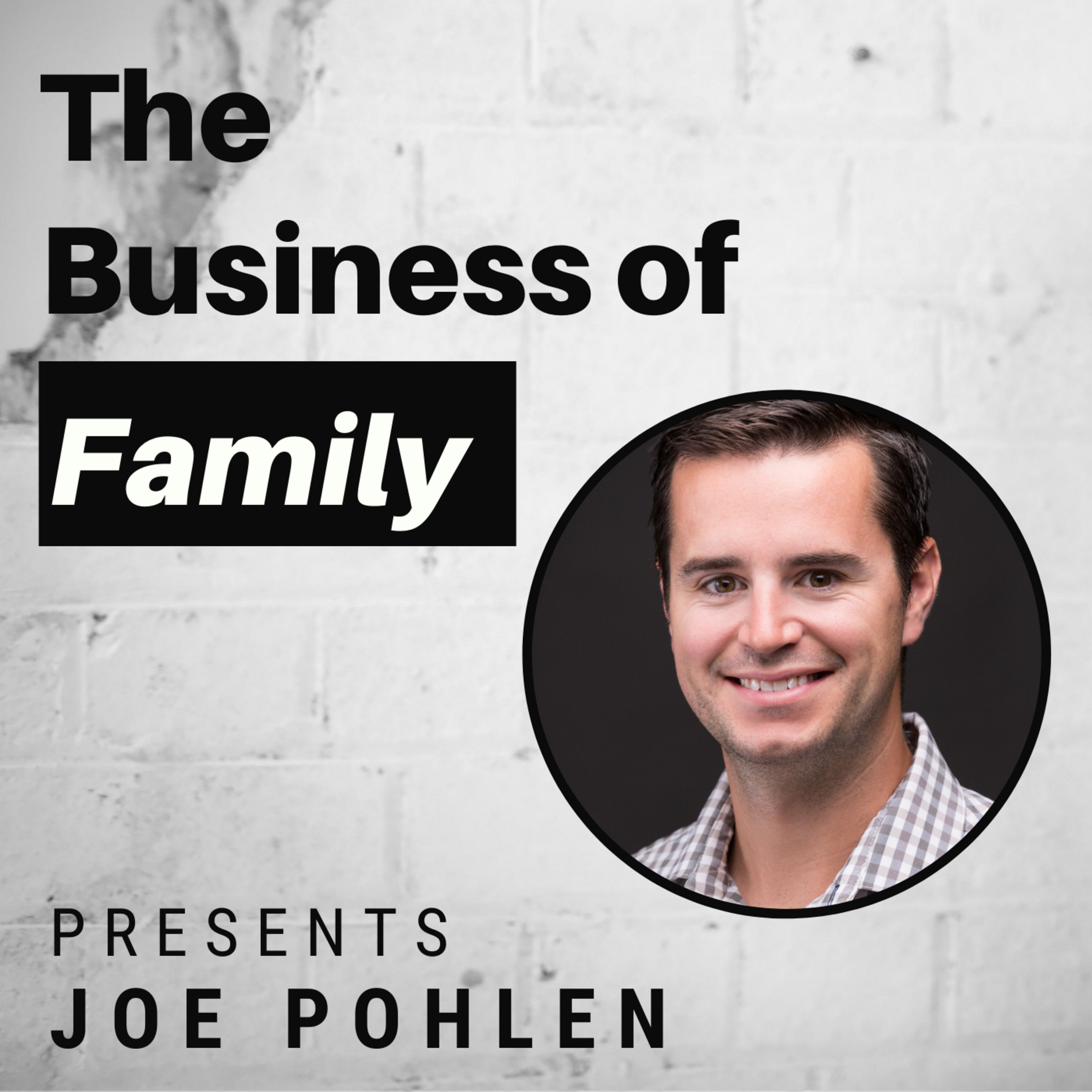
Episode 43 · Season 2
Caring for Elders & Why it's Important to Have Daughters
Key ideas from this conversation
Decide while you're well what happens when you start slipping, and who has the right to say so.
What people want at the end isn't complicated: a warm meal, safety, respect, and somewhere to put their love.
From what he sees in his buildings, the oldest daughter, or a daughter-in-law, is usually the one who visits and decides.
Read the full show notesBio, standout quotes and the episode timeline
Joe is the owner of Cardinal Senior Management, an operator of assisted living communities in the Untied States. Joe started the company with his business partner in 2015 and hopes to continue their growth in the coming decade with a focus on affordability and decentralized leadership. Joe lives in Grand Rapids, MI with his wife and 4 year old son.
Standout Quotes:
- "Unless someone's livelihood and their family’s livelihood depends on what you're doing, you're not an entrepreneur" - [Joe]
- "Unfortunately, the US gets a reputation for not caring for our elderly the way a lot of other countries care for their elderly" - [Joe]
- "If you want your family interacting with you in the US, I would recommend having daughters or making sure that you're close with your daughters-in-law" - [Joe]
- "No one really cares what you have to say, it's your actions and your consistency" - [Joe]
Key Takeaways:
- Joe Pohlen is the owner and Partner at Cardinal Senior Management, an operator of assisted living communities in the U.S. with a specialty in affordable assisted living.
- Joe started his career in Student Housing which was doing well but he wondered if that was his purpose in life. Knowing a few people who were working in assisted living and doing well, Joe started to figure out how to get into this field with his partner, Chuck. He started his journey and grew successfully.
- Joe manages assisted living facilities where inhabitants pay ahead covering housing, activities, and care; the big challenge, however, is that more seniors lack the financial resources to move into the facility. The solution to this would have to involve the federal government. For families who cannot afford the cost, they would first be moved in with a roommate, and Medicaid will be involved to pay a lower price to help retain the care of the elderly. There are plans to implement other strategies to help improve the care for the elderly especially for those who do not have the financial capacity required.
- The majority of decisions in a family are made by the oldest daughter and also most visits are usually from daughters, hence it pays to build good relationships with the daughters to encourage visits from the families.
- Families also need to have conversations about steps to be taken to address issues related to the welfare of the elderly in different scenarios. People move into assisted living for two reasons, one is that they decide it's the right thing for them, and the second is when they lack a choice in the matter because the decision has been made for them. Those who decide on their own have a more successful experience.
- Joe and his wife had previously decided not to have a kid but they changed their decision in the lockdown, deciding to adopt a kid who they were strongly emotionally drawn to, without anticipating it. He hopes his son will learn from him especially through his actions.
- From experience, Joe observed that most families hand down wealth to the next generation very poorly and it often fails, hence he has always planned to spend his wealth rather than go through the same ordeal in trying to pass it down. His focus is on giving more of an education to equip his kid with the right tools to live successfully.
- Joe's letter to his kid: "You are enough, your accomplishments are not the definition of who you are. Your mom and I love you. Continue to treat people how you want to be treated. If you go through this world doing the right thing even when it's hard, it will work out just fine for you"
Episode Timeline:
- [00:50] Introducing our guest for today, Joe Pohlen.
- [01:41] About Joe's background
- [05:27] How did you build your team to provide care rather than just storage?
- [11:56] How do you handle families that cannot afford the cost of assisted living care?
- [18:20] How do you encourage more frequent family visits?
- [21:06] How can a family discuss the topic of assisted living for their elderly?
- [26:44] About Joe's personal and family life.
- [38:50] Joe's letter to his kids.
Links:
- Cardinal Senior Management – Mindful Stewards with Bold Results : Joe is the owner of Cardinal Senior Management, an operator of assisted living communities in the Untied States. Cardinal Senior Management corporate offices are based in Grand Rapids, MI. Co-founders Chuck Gray and Joe Pohlen began the company with an idea of finding unique properties that needed a fresh culture and an opportunity for turnaround. Autumn House East and West in York PA were the first buildings and community for the company.
- Home - Care Cardinal : Care Cardinal provides an intimate, home-like setting where staff and residents interact like family. We’re rethinking and redesigning how to care for residents.
- Home - Live Cardinal : Live Cardinal provides care, compassion, and dignity in their residential care homes that truly have a home-like setting. We believe that senior members of society should live out their golden years with dignity and respect, remain active and involved in their community to the best of their ability, and be surrounded by friends, old and new. Assisted living is not the only housing option for an older adult who needs care. An emerging alternative is a residential care home, which provide care to small groups of adults, typically over age 60. Live Cardinal specializes in this unique form of living for seniors: A residential care home for those who cannot live independently, but hate the idea of a large institutional setting.
Read the transcript
This transcript was generated automatically and may contain errors, including in names. Listen to the episode for the exact words.
MikeWelcome to The Business of Family. I'm your host, Mike Boyd, and this is my look into the world of multi-generational wealth creation, family enterprise, stewardship, family office investing, and the curation of a legacy. On the podcast, I interview members of some of the world's most interesting families to hear how they pass knowledge, resources, values, and wealth to the next generation.
I hope you will enjoy sharing this learning journey with me and would greatly appreciate any feedback or referrals you have to offer. To sign up to my weekly Business of Family newsletter, go to businessoffamily.net forward slash newsletter. Joe Pohlen is the owner of Cardinal Senior Management, an operator of assisted living communities in the United States. Joe started the company with his business partner in 2015, and they hope to continue their growth in the coming decade with a focus on affordability and decentralized leadership.
Joe lives in Grand Rapids, Michigan with his wife and four-year-old son and brings to us a really interesting and different perspective today than we usually hear when we're talking about generational families. I really hope you enjoy this conversation as much as I did. Joe, thanks so much for being here with us on the show this week. It's great to have you.
JoeThanks for having me, Mike.
MikeNow, you're a little bit different to some of the guests that we've had on the show before, and that's very, very intentional. I'm not going to tell your story for you. Will you give us a little bit of a background as to your business in particular and how you've come to be in the industry that you're in today?
JoeYeah. So, I'm the co-founder of a company called Cardinal Senior Management. We operate assisted living buildings in the state of Pennsylvania in the United States and in Michigan. And we specialize in affordable assisted living. So you'll come into our buildings and the rates will be middle to low in the market. And we've had a lot of success there and find that that's where we enjoy playing.
MikeAnd how long ago did you get into this space? What attracted it to you? As an entrepreneur, know, you obviously saw a business opportunity here. How did this get on your radar in the first place?
JoeYeah, so I got my career started in student housing. So I was doing student housing right out of right before the great financial recession and kind of through the great financial recession. I met up with a couple individuals who had some cash and we went out and started buying distressed student housing and distressed self-storage. So I was running self-storage communities and really had kind of a moment of crisis where I was like, is this what I was put on the planet to do? Rent garages. And the business strategy was pretty simple. Give away as much free rent as you possibly could to get people to sign up on auto debit and then push your rent increases in February. And where we live, February is miserable and snowy and no one
would ever move their stuff out. And I was making good money at the time, more money than I had ever made and just kind of had a moment like, is this really what I'm supposed to do with my life? And I'd always been pretty close to both my grandfathers and had looked up to both of them. And I knew a couple of people in assisted living and taking care of the elderly and they were making good money. They had employees, which is something that I really aspire to is to be a leader, business leader in my community. And so I went on a journey to try to figure out how to get into assisted living. And I met up with my business partner, Chuck. Chuck and I are 50-50
owners of Cardinal. And we got started in 2015 with two buildings in York, Pennsylvania, and did really well with those two buildings. Grew that portfolio to seven buildings, about 700 beds of assisted living in Pennsylvania. And then went to our backyard and picked up some more buildings in our backyard. And we still think of ourselves in the scrappy entrepreneurial journey, but we are trying to figure out what Cardinal, what we call Cardinal 3.0 looks like.
Cardinal 1.0 is when Chuck and I and a couple Excel spreadsheets were doing our best to manage assisted living buildings. Cardinal 2.0 is when we got serious and hired in a really talented CFO and brought in some higher level manager talents and they put systems in place for us to grow. And then Cardinal 3.0 is how do we take the platform we've built and really try to grow that into something we're proud of that serves seniors in the way that we believe seniors deserve to be served.
MikeThat's fantastic. And I've got a couple of follow-up questions because, of course, as a foreigner, I don't have a complete grasp of the space as it operates in the US. But firstly, I guess back to the entrepreneurial journey, there must be a big difference between sort of being a real estate guy and operating storage sheds and then coming into being an operational guy and really dealing with people probably at quite emotional stages and challenging stages of their life at times. How do you sort of build a team but also pivot a business to deal with providing care rather than providing storage? To me, that just seems like quite a journey that you've had to make in learning that. Was it difficult or did it just sort of happen naturally?
JoeI mean, it definitely was its challenges, but it was what I wanted to do. I always looked up to the business owners in my community when I was growing up. I always knew that's what I wanted to do. So when I was in college, I was in the entrepreneurship program and I owned a handful of single family homes I would rent out.
And I thought of myself as an entrepreneur and I met a pretty successful entrepreneur. And I said, you know, I'm an entrepreneur too. And he's like, well, how many employees do you have? It's like, oh, well, there's me and I hire contractors and, you know, lawyer makes some fees off of me. And he's like, look, kid, unless someone's livelihood and their family's livelihood depends on what you're doing, you're not an entrepreneur.
and I really wrestled with that. I was so angry and it took me a while until I kind of realized in the way that I view entrepreneurship, that's true, that you have a responsibility. Those who work for you, they follow you and they follow the vision of what you're putting together and that puts food on their tables and allows their kids to go to school and it's bigger than yourself and I wanted that responsibility.
I think it's really, really cool. And it's something I don't take for granted. So I was looking for any opportunity to really become an entrepreneur the way I wanted to be an entrepreneur. And right now Cardinal has about 600 employees across all of our buildings. We create opportunities at the entry-level job. So someone just finishing high school can come work for us at Cardinal. And we have people making hundreds of thousands of dollars a year and some of our manager and leadership positions. So we provide lots of different opportunities to different folk. Majority of our workforce is women. And it's important not only to provide financial opportunities for people, but really try to create an environment where
people feel respected and they feel that their opinions matter and that they can make a difference. And that's what we've been able to accomplish at Cardinal. And I get to go to work every day. And I do feel really proud of myself and our team of what we built. And I feel like we're just getting going. So it's an exciting time to be at Cardinal, especially coming out of COVID.
MikeNo, it's fantastic. And I appreciate you sort of articulating how that vision came together in the value system for you and wanting to be a great entrepreneurial leader. Certainly something I've admired in you watching from afar, just seeing how you interact on Twitter and other places where we originally connected, the examples from what you're doing with your team and how you interact with them and how you supported your team through COVID in a very difficult environment, I think is really admirable.
So hats off to you. I think you've grown into the leader that you want to be and you're also setting examples for other leaders out there.
JoeThank you for the compliment. It really does mean a lot.
MikeSo, Joe, I'm curious now, just from a regulatory perspective, again, apologies if I'm asking simple questions, but from afar, I'm curious, do you need to be licensed or in some way qualified to start an assisted living or senior living facility in the States? Or is it more a private enterprise and there's a fair bit of flexibility in terms of how you deliver a service like that?
JoeSo, all of our buildings are licensed. We're licensed through the individual state. We aren't licensed through the federal government. There's two, they seem very similar businesses in the United States that take care of the elderly. There are nursing homes, also called skilled nursing facilities. You'll see an acronym called SNF, S-N-F, for skilled nursing facility. Those are regulated by the federal government and by the state government. The payers, majority payers for those facilities are the federal government through the Medicare or Medicaid program or some sort of insurance. The buildings I operate are assisted living facilities. You also see those called retirement communities. You'll see them called ALFs, assisted living facilities or ALFs. And those are very similar to mine, which are private pay.
So a family or an individual would just pay me on the first of the month and that payment would be for their housing. So that would cover their room, their board, their food, activities, and then they'd also be paying for care. So we bundle our cares. They're called levels of care. It's pretty common in our industry. So really, they pay one amount each month and it covers almost every expense that they would have. So those are kind of the two food groups that we're in.
The big challenge in our industry right now is that more and more seniors don't have the financial resources to move into our facilities. And you really, there's only one payer around who's got the resources to really take care of these individuals. And that's the U.S. federal government. And there's a lot of debate amongst people who hold my position of how much federal involvement we really want, because with their dollars come strings and regulations attached.
And everyone has different opinions. My opinion is, in assisted living, we exist, our industry exists in service to seniors and the seniors who need our services are those who don't have the financial resources. You're seeing a lot of baby boomers who haven't saved for retirement. Instead of arguing about right or wrong, I think we need to just look at the problem and look at the solution. And I don't see a solution to the problems that our country's facing that doesn't involve the federal government needing to be involved in assisted living. And if there's any assisted living operators out there listening to this podcast. I'm sure I angered a whole lot of them, but that's where I see the future of our industry.
MikeI appreciate you sharing that and the distinction as well. I'm curious how you interact with families who, as you say, there's a lot of seniors that aren't prepared financially to enter assisted living facilities. What alternatives are there for families? Do you have people that you have to turn away, or is it very obvious that they can't afford to be there? How do you handle those difficult conversations if they do occur?
JoeSo in the state of Michigan, Michigan sets aside some Medicaid dollars. So Medicaid's the insurance provider for the poor in Michigan or in the United States. So if someone runs out of funds, what we would do is move them in with a roommate. We would bring Medicaid in. They would pay us a lower rate than what the private pay rate is.
But through getting roommate, we could create an environment where the person doesn't have to leave their home with us. They still have the same caregivers, still have the same friends in the building. And we consider that a huge win in the state of Pennsylvania. I'm on the board for the Healthcare Association, and we are working to try to find a similar program or create a similar program in that state, which I consider a big win for us.
Unfortunately, our country gets a, or the United States gets a reputation for not caring for our elderly the way a lot of other countries care for the elderly. And in my experience, that certainly holds true. You know, the majority of people who pass away in our building are comforted only by our staff when they pass. We take that extremely seriously.
We don't create any company policies of what happens when someone's passing. Our staff feel like they've been put on this planet to care for the elderly. And we give them all the freedoms and autonomy to do what they feel right in each building. Each person kind of handles that in a different way. And I'm just continually impressed at how people come move into our building who don't really have access.
A lot of them don't have family. and our staff really becomes their family. We certainly do work with families and there's a lot of great stories of that. But I'm really, really impressed with the way our team loves and cares and holds the hand of their loved one or their residents while they're dying.
MikeIt's incredibly sad and unfortunately happens too much in not just the United States, but different parts of the world. And it's part of the reason I wanted to invite you on, Joe, and share these stories because the business of family often explores generational wealth or multi-generational business families, which really means we're often looking to the future. We're talking about the next generation, the rising generation quite often.
But I think sometimes, as you've just likely demonstrated, we're forgetful of investing the same energy in our seniors or our elders in the family, and particularly those that don't come from substantial wealth. But sometimes even those that do, if we have fragmented family relationships and someone's senior and they lose a spouse, then they may not have the care and support or children in the same city or state that can support them in their later years. And I'm just curious for your perspective, you must see this quite often, of what people really need in their later years and what becomes most important to them?
JoeYeah. So whenever I go to Pennsylvania, which is about a two and a half hour flight from where I live, I always sleep in the buildings. It gives me an ability to interact with our staff on all three shifts and get a feel for the reality that our residents live in. I find it personally helpful and centering to kind of sleep in the rooms that our residents live in and really kind of think through how I want my life to go and ultimately answer the question, am I proud of the service that we're providing in the building? Because I'm eating the meals and sitting there.
And I've kind of seen a lot of that on what happens if you don't have a family who cares for you. And we're seeing that rise more and more, especially with more and more people going through divorce. So you're seeing more people who really don't have a spouse or estranged children. In the United States, it's pretty common for the children to move away, especially in the areas that we're in, which is in the Midwest, where a lot of in the 80s and 90s, a lot of brain drain happened. A lot of people left those communities to go to coastal communities. We're interacting with a lot of people who are alone. I think we get paid for and we measure the care we provide.
We do that in minutes. We have different metrics for that. What you'll see a lot is we track the call bells. When someone needs something, they press a button and that alerts our staff. And a lot of, you can track what it was for, how often they hit it, and it will never show up there because the staff member doesn't really know how to code it. But majority of those call bells are loneliness that our residents are facing.
And we're in a congregate setting. So you have lots of elderly people living together. And it's impossible for me or any of us to effectively staff to end loneliness. It's a really, really challenging thing to do. So we feel the secret sauce of our business is the activities department. And they're called the activities coordinators. But really what they are is kind of volunteer coordinators and resident coordinators try to get residents to interact with each other.
And through supporting each other, that really helps our residents a lot. And when you get, or what I realized when you get to the end of your life, what you really want is, you know, a warm meal in an environment that you feel safe and be surrounded by people that respect you and care for you. And frankly, a place for you to put your love into other people.
MikeThank you for sharing. I'm curious as a follow-up to that to ask about the residents in your facilities who do come from well-supported families who perhaps visit or pay for their care there how do you think that can be emphasized or encouraged further you know potentially when families do live you know some distance away do you try and encourage you know more frequent visits is it something that that even shows up on your radar as an operator? Or what's the resident to family interaction type? And can it be done better across the industry?
JoeMy experience, I don't have the data to back it up, but just being in the buildings. If you want your family interacting with you in the United States, I would recommend having daughters or making sure that you're close with your daughter-in-laws. The majority of all the Decisions are made by the oldest daughter and all the visits are usually daughters.
So if you're worried about this, I recommend either having daughters, improving your relationship with your daughters or interacting with your daughter-in-laws. That's just kind of ultimately what I've seen. Of course, there's exceptions to that. You know, you often do see a little bit of that Cats in the Cradle song. You know, you didn't have time for your son while he was growing up.
You know, he's not going to have time for you when you're getting older. So, yeah, those are kind of some insights that someone might not expect to hear.
MikeYeah, no, incredibly valuable. I'm sure there's some people taking some notes there too. And, you know, it reminds me, we were having a quick chat before we started recording about some of the different families I've interviewed from different cultures around the world. And of course, some cultures, particularly in business families, preference male children or the eldest male in terms of lineage and who's going to inherit and who's going to run the business and what have you.
And in some cultures, daughters are overlooked or it's more focused on who they marry. And it's nice to hear your insight there to offer a completely different take on children and sons and daughters. I think that's great insight.
JoeI do like to remind all of my friends who have daughters, you might not be looking at the whole picture when that balloon pops and it's a pink balloon. This is more than just what someone will be like when they're a teenager. What happens when they're 70 and you're 95?
MikeYeah, that's amazing. Joe, if we come back to some of the families in the audience that listen to this, they're perhaps multi-generational already. There's businesses, there's assets involved. Maybe they're dialed into family governance, which is why they're listening to this and they're planning for the next generation. They're having family meetings. They're doing all the right things. How should this topic of aging elders, senior living, assisted living, how should this get on the agenda for a family meeting or a family discussion? What should families be doing if they are really intentional and proactive to ensure that the later stages of life of members of their family is taken care of to a really high standard?
JoeYeah. So most people who do some basic planning, have it written down and understand what happens when they are in a vegetative state. There's very clear guidelines on how things move. But what I've never seen and what's going to happen to one in three Americans and will most likely happen to every single family that's on this planet is that someone will get dementia. Dementia is incredibly debilitating. It's an utterly horrible, horrible disease. There's lots of different opinions on how Alzheimer's and dementia happen. The research I've looked at tracks a lot with Western diets. It's a form of diabetes that really affects the brain. If you've ever known anyone with dementia, it's not like it happens overnight. It's not like you didn't have dementia and you woke up
in the morning and you have it. It's kind of a degenerative disease. Lots of terrible decisions are made by people with dementia who might see some stuff slipping. I would really encourage every family and every kind of leader of a family to really have a decision of like, when I start slipping, you know, what happens? What happens when I'm trying to make decisions and I'm mentally really not in the best case to be making decisions? And dementia creates a lot of different feelings and emotions. Anger is one of those that I've seen. It's really, really tough, especially for people who've been accustomed to a certain quality of life, who've oftentimes been rewarded handsomely their entire life for their mental aptitude. And to watch that
deteriorate and go away is really sad. So I would probably encourage really anyone who's thinking about family planning to really take a real look at dementia and how each of us are setting ourselves up to be successful in the face of something that's going to affect really every family that's really listening to this.
MikeJoe, is there anything that families can do to best prepare for someone getting dementia? Or is it more around preparing, as you say, decision-making control? Because I imagine that that's really difficult to find the line as to when decision-making is no longer applicable. If it's a slow degenerative disease, the person with the disease likely thinks that they still have capacity.
And a family member or a son or a daughter watching from afar says, actually, I don't think you're sharp or you're starting to drift. Where do you draw that line and say, actually, I'm stepping in now, I'm using this power of attorney or whatever the document might be to act on your behalf. But that's going to be a difficult conversation and a difficult time to pick.
JoeYeah. I mean, it's really hard. And frankly, Mike, I don't have a clear answer. I can tell you in my experience working with people with dementia, it is so much easier and you're making your life so much easier on your loved ones and the people that care about and your spouse. If you're the one who notices it and you're the one who takes action yourself. So people really move into assisted living for two reasons. One, they decide it's the right thing for them.
And then there's people who there is no other choice in the decisions being made for them. It is very obvious which people have a more successful experience in our buildings. People who make the decision on their own, you're relieving a huge burden from your loved ones and the people around you if you're able to make that decision. And I'm not saying that assisted living or my buildings are the right setting.
It might be for a wealthy individual to hire full-time care at the house. It is a lot, a lot of work being a caregiver for your spouse. So if you're not wanting to do it for your kids, I would think about doing it for your spouse. A lot of times what we've seen is one member of the couple will get dementia, be pretty heavy care.
the other member, the other couple, or the spouse will become the full-time caregiver. And the spouse actually will pass before the person needing all the care, just because of how challenging it is to be a full-time caregiver, especially when you're not a professional, especially when you're older as well. You have physical abilities that really don't match up with the needs of the job.
MikeAnd I think these insights are just so incredibly valuable and difficult conversations to to listen to and to have, but they're so important. So I appreciate you sort of shedding some light and bringing these topics to the surface for us. I'm curious now to pivot to your personal life, if you don't mind me asking. Your perspective on generational wealth, was it, you know, did you come from a family that you consider had a generational plan around business or any other form of capital?
Do you intend for it yourself? What's the Joe story?
JoeYeah, so I came from a middle-class family. Mom was a homemaker. Dad, computer programmer, still works at IBM. We carried a tremendous amount of personal debt while I was growing up. We had a nice house, couldn't afford the furniture in it. I had a great childhood. Mom loved on us, was always there. We came home from school.
Dad made every soccer practice. Really thankful for the life I had growing up. There was a 401k that my dad put money into and didn't own any real estate. No one in my family really owned any real estate. And we never talked about generational anything. I actually think talking to a lot of other entrepreneurs, especially through the YPO program who might be in multi-generational situations, really my parents had no expectations for me and my siblings. It really allowed us to swing free and do what we wanted. This idea of, my parents let me do whatever I wanted for a career is foreign to me. It was so obvious that that was what was going to happen. I'm an assisted living operator. My brother's a biologist living
in Alaska. And my sister recycles in clothing to make designer clothing in Detroit. So she's an entrepreneur. And my brother probably is the most entrepreneurial of all of us living in Alaska and Africa for a little bit and China and kind of going wherever his heart tells him he needs to go. So they kind of raised entrepreneurial children while none of them were entrepreneurial at all.
And really, we didn't really not sure how that came about. And I met my wife 10 years ago, and she's from Central America. She's from Nicaragua. And when we met, we were like, she's like, I don't want to have kids. And I was like, I don't really want to have kids either. So this whole generational planning was going to be super easy. We were just going to make money, spend it all and say goodbye. But actually during COVID, our neighbors were fostering a young boy and they had adopted his full biological brother 11 years ago. And they were in a situation where they couldn't adopt Jackson and kind of came to us and said, you know, look, the biological mom,
And us, the brother, they all wanted the two boys to grow up knowing each other and asked if we wanted to be parents. And my wife and I changed our tune on that spot. I mean, it was amazing how such a large decision was made so quickly. It was the right thing to do. It was what we wanted to do.
We fell in love with him the moment we saw him. And the adoption actually was finalized during COVID. So most people, when they have a child, you get like six months heads up before the kid shows up. I mean, he like during COVID moved in and then I was working from home. My wife was working from home.
We had no babysitters, no nannies, no family help. It was live bullets while during COVID. And it really turned out to be a bonding experience for all of us. And I've talked to a lot of YPOers about this. that my son's going to be growing up not only in a very different environment than his biological brother lives down the street. He's also growing up in a very different environment than my wife grew up in, very different environment than I grew up in. I mean, the opportunities available to him is going to be significantly different than what even I had or my wife had.
And I talked to a lot of entrepreneurial, there are a lot of YPOers in the same situation. And just kind of asked the question, can you really gift your child struggle? Which, I mean, it's kind of comical, but of course not. And those struggles kind of produced a lot of personality traits in myself that I'm really proud of.
So I'm just as lost as every other parent trying to figure this whole thing out. I mean, I got him to bed tonight. So I count that as a win and kind of made the promise to him that I was like, look, I'm not going to expect you to be the perfect kid. Hope you don't expect me to be the perfect dad.
You know, I'm going to try my best. And, you know, if you try your best, it's really all we can do. And hopefully I can pass on that idea of just kind of swing free and see what happens.
MikeIt's just an extraordinary story, Joe. Let me ask, how old is Jackson?
JoeHe just turned four.
MikeWow. So you made this decision in the middle of COVID, locked down by the sounds of it, working from home, and you adopted a child. So from never going to have kids to all of a sudden, you're a dad for about a year or so now. I mean, there's so much to unpack here. How did the mindset shift? How did you go from don't really feel like we want to have children to this opportunity to help Jackson presents, and you and your wife make that decision.
I mean, how does that happen?
JoeYeah, so one area I get a little kind of cringey a little bit is when anyone kind of talks about, you did this to really help Jackson. And the decision was extremely selfish in the fact that I saw him, my wife saw him and we wanted to be his parents.
MikeIt's a wonderful clarification. Thanks.
JoeYeah. Yeah. I mean, you didn't get to choose. I mean, we chose it. You know, frankly, if it was another kid, I don't think we would have made the same decision. There's just something about him that we felt that like that kid, like we're going to be so fortunate to be his parents. And I'm not entirely sure what clicked, but I mean, it clicked.
I mean, the color blue looked different. The look in my wife's face looked different. And it just knew it was right. And really, all the largest decisions I've ever made in my life were made pretty short order. I'm a kind of a gut feeling type person. And I don't think if you take three weeks to make a decision or you take 30 minutes to make a decision. When you come to the conclusion and you feel like that's the right decision, then that's the right decision and no need to string it out longer than it needs to be.
And I mean, we decided in that moment, I remember I saw Jackson first and when they said that he was up for adoption or was going to be placed for adoption. I had made the comment on, I knew I wanted to adopt Jackson, but I had made that comment. I'm sure a nice family will adopt him and he'll find a nice home to kind of give my wife an out.
And I turned around and she was crying and she's just like, what are you talking about? And as soon as I saw her face, I knew that she felt the same way I did. And it was kind of a no brainer. And it was just kind of funny how life just works out that way. And I think you can try to fight the twists and turns or you can just kind of laugh about it and enjoy it because a plan is important and I'm kind of a planner.
But you got to kind of be open for those opportunities.
MikeNo, that's really special. And I have to ask, how has your mindset shifted since becoming a dad? Are there new priorities? Are there different priorities? Do you place importance on different things? Or is it too soon? Are you figuring this out as you go?
JoeYeah, still feeling it out, how it goes. Frankly, I don't remember many of the things my dad ever said. but I remember watching him and watching the way he treated other people. And, you know, I kind of think about this also for my work. Just no one really cares what you have to say. You know, it's just your actions and it's your consistency.
And I could tell Jackson a thousand times, you know, dad always comes back. Dad always comes back because, you know, when I drop him off at daycare, things like that, not super thrilled about it all the time. But it doesn't really matter how many times I tell him. I have to always come back. And that's the only way to clearly make it clear to him that that's what happened. So I have a view of the man I want to be and the father I want to be. And really, it's not going to happen overnight. It's just going to have to be told. The story will just have to be told through my actions over the next 60, 70 years.
MikeYou mentioned earlier too that when you weren't planning to have kids, you were going to make the money, you were going to spend it all, adios. What about now? Is that still the plan? Are you going to make it, spend it, adios? Jackson will find his own way? Or do you think that there might be a different strategy emerge over the years?
JoeWell, where we sit right now, plans still spend a lot of it.
MikeYou absolutely should still enjoy it, don't get me wrong.
JoeYeah, I mean, I've not seen really any successful families pass down wealth, just in my own ecosystem. I've really not seen it done well. I've only seen it done poorly, where it actually makes things worse. So part of my theory of spend almost all of it is at least I know I removed that negative off the table.
And I mean, you know the statistics. I mean, the chance of it going well is not the majority. So in my head right now, I mean, I'm still buying real estate and still kind of trying to think long term. At the time of recording this, I'm 34 years old. So a lot of my wealth preservation is for myself, frankly, because I really know how expensive it is to be 70 years old and either you or your spouse is in poor health.
So right now, the plan is try to put as much money away and assets away and make decisions that 50 years from now, those assets could continue to generate for me when maybe I have dementia or my wife has dementia or we need the services. And I think if I could show Jackson how money works and explain to him how you go about owning assets and give him a leg up, really that education is really much more valuable than the dollars.
MikeLook, you're absolutely right. And certainly the statistics are against everybody, which is partly why I started this podcast to explore some of the exceptions to that rule, some of the minorities who do get it right. But as we've learned, it takes an enormous amount of commitment and intentionality, I think, to make multi-generational work in a meaningful way.
Financial capital can really impact people poorly if it's not managed well. But I think a lot of what you've talked about in this conversation today is more on the human capital side of things in caring for people as they age, but also setting up the next generation with the right tools and education and understanding to live the life that they want to live, if I'm hearing you correctly.
JoeYeah, definitely.
MikeJoe, this has been so nice and a real change of pace, I think, from some of the other conversations we've had. It's time now for our final question, a question I ask all of the guests that come on the show. Imagine you're writing a letter to your children. What is one lesson or idea that you don't think many parents would mention, but you consider important to understand?
JoeYeah, I think if my son ends up listening to this podcast down the road or it's in a letter, it would be that you are enough, your accomplishments, and really that's not the definition of who you are. Your mom and I love you very much and continue to treat people how you want to be treated. And if you go through this world doing the right thing, even when it's hard, I think it'll ultimately work out just fine for you.
MikeFantastic. A great lesson too. Joe, thanks again for taking the time to join the show. I really appreciate all that you've shared. And to be honest, the things that you've made me think about. You've given lots of takeaways. Thanks again.
JoeThank you, Mike. Thanks for having me on and appreciate all the work you put into the podcast and getting this information out here. And yeah, thank you so much.
MikeTo find more episodes of the Business of Family podcast, go to businessoffamily.net. You can also sign up for my email list at businessoffamily.net forward slash newsletter. After you sign up, you'll receive immediate access to all past issues and then one email per week. You can also follow me on Twitter using at Mike Boyd. If you enjoyed the show, please tell a friend or leave a quick review on iTunes, which will help more people discover the business of family. Thank you so much for listening.
Keep listening
If this one landed, start here next.

High-Performance Family Boards from New Zealand to Africa
Writing down intentions while nothing is at stake.

Raised Healthy, Wealthy & Wise
Explaining later-life decisions to your children so they never have to guess.

Work, Money & Meaning: How to Let Go When the Time Comes
What work gives an owner beyond the money, and what replaces it.
The Business Family Diagnostic · Plan B
When I start slipping, what happens?
Joe says families plan for the clear-cut cases and rarely for the slow slide. Has the senior generation in your family said, while well, who decides when they no longer can?
“If the family had to leave the country it lives in, it knows where it would go and how.”

Every family wishes someone had recorded the generation before.
I built Enduring Stories to do it for yours: a guided voice conversation, from home, that keeps your family's voices, values and history.
The newsletter
The most useful things in these conversations are the things families rarely say out loud.
I share them in my newsletter once a week. Sign up to receive the ideas directly and start building the foundations for your family today.